
Private AI: How to Bring Artificial Intelligence to Your Data and Your Cloud
How can you bring artificial intelligence into your company without sacrificing control over data, security, and the ability to customize models? In this webinar, Andrea Bosio of AIAbility and Vittorino Aprile of Critical Case present an alternative approach to using large public AI services: open models installed and managed within a private cloud infrastructure. A practical comparison of open-source and proprietary models, privacy, costs, scalability, cybersecurity, fine-tuning, and GPU infrastructure—with the goal of understanding how to build AI solutions that are truly integrated into business processes and data.
25 min
What you'll learn
- How to Identify an AI Use Case That Is Truly Beneficial to the Business
- What Is the Difference Between Open AI Models and Proprietary Models
- When It Makes Sense to Use an Open Model in a Private Cloud
- How to Increase Control and Privacy Over Business Data
- How to Evaluate the Costs, Scalability, and Performance of an AI Solution
- Why Fine-Tuning and Customization Are Important in Enterprise Projects
- How a GPU-Based Private AI Infrastructure Works
- How to manage the model lifecycle using MLOps approaches
- How to integrate the cloud, data, and models into a single AI architecture
- When to use a hybrid architecture combining private infrastructure and external services
About
Enterprise AI Doesn’t Necessarily Have to Reside in Someone Else’s Cloud
Artificial intelligence is rapidly making its way into business processes, but along with the opportunities come new questions:
- Where does the data used by the models end up?
- How customizable is an AI solution?
- How do you manage costs, security, and scalability?
- Is it always necessary to use proprietary AI services?
- When is it better to adopt an open model in a private cloud?
In this webinar, Andrea Bosio of AIAbility and Vittorino Aprile of Critical Case address these issues based on a simple principle:
Your artificial intelligence, on your data, in your cloud.
From Business Problem to AI Solution
An effective AI project doesn’t start with the technology, but with identifying the problem.
You need to understand:
- which process you want to improve;
- what data is available;
- what risks need to be managed;
- which model is most suitable;
- what infrastructure is required;
- how to measure the value generated.
This alignment between the problem and the solution gives rise to a truly customized AI project.
Open Models or Proprietary Models?
The webinar compares two approaches.
Proprietary models such as ChatGPT or Gemini offer high performance, continuous updates, and a very mature ecosystem.
Open models, on the other hand, can offer:
- greater control over data;
- greater customization;
- the ability to fine-tune;
- deployment in private environments;
- more predictable costs in certain scenarios;
- greater independence from the provider.
The choice isn’t ideological: it depends on the use case and can even lead to hybrid configurations.
AIAbility: Private and Customizable AI
AIAbility was created precisely to address this need.
The solution combines open models with a private cloud infrastructure, providing:
- a model hub;
- fine-tuning tools;
- MLOps;
- prompt engineering;
- prompt library;
- model lifecycle management;
- GPU infrastructure;
- security;
- scalability;
- cost control.
Why the Private Cloud Matters
The private cloud allows you to know where your data resides, how it is managed, and which infrastructure resources are being used.
In the model presented in the webinar, data can be hosted in data centers located in Italy, with infrastructure designed to ensure:
- data residency;
- security;
- compliance;
- scalability;
- GPU management;
- infrastructure control;
- continuous operational support.
AI and Infrastructure Must Evolve Together
A truly enterprise-grade AI solution requires much more than just access to a model.
It requires an architecture capable of bringing together:
data + models + cloud + security + governance + business processes.
And it is precisely in this area that the collaboration between AIAbility and Critical Case takes shape.
Watch the webinar and discover how to design a private, secure AI solution tailored to your company’s needs.
Speakers
- AB
Andrea Bosio
AI Evangelist · Aiability
Related content
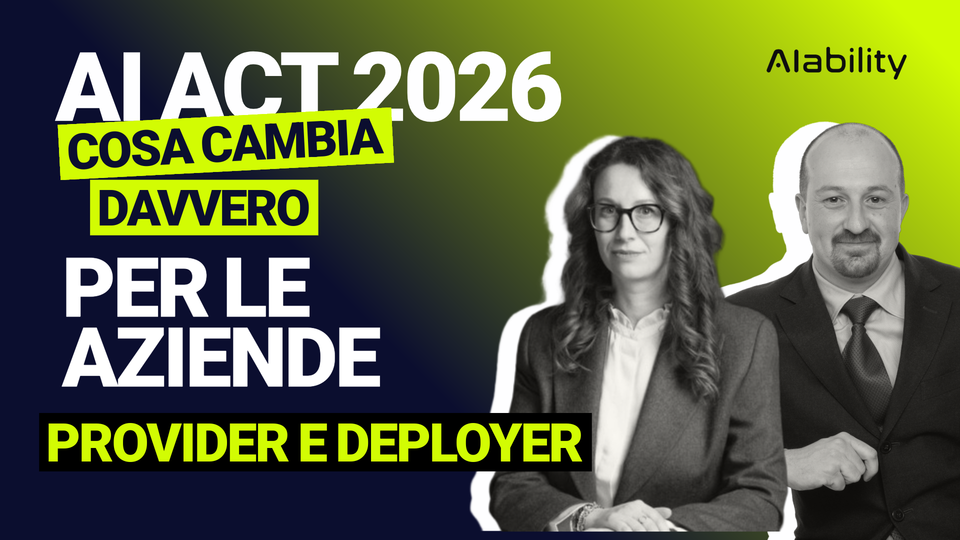
AI Act 2026: What Really Changes for Companies, Providers, and Deployers
On August 2, 2026, the AI Act enters a new phase of implementation. But what does this really mean for those who develop, integrate, or use artificial intelligence systems? In this webinar, Andrea Bosio of Zero11 speaks with Maria Chiara of Studio Torta to clarify the responsibilities, obligations, and risks introduced by the European regulation. Providers, deployers, data quality, high-risk systems, AI literacy, generative models, governance, documentation, and penalties: a practical discussion to understand what companies need to do today to prepare.
47 min
Watch →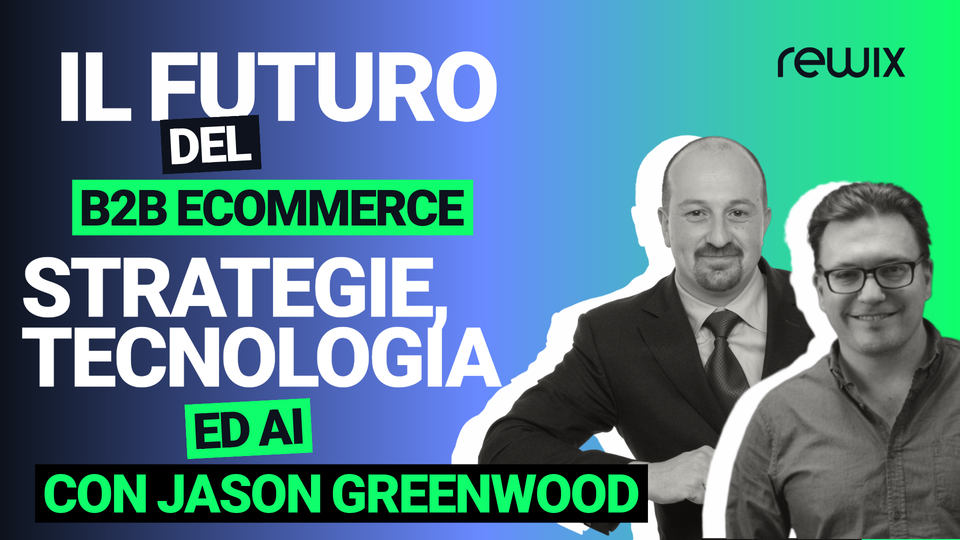
The Future of B2B Commerce: Strategies, Technology, and AI with Jason Greenwood
B2B commerce cannot be treated as B2C e-commerce with a few additional features. The buyer, processes, payments, pricing, logistics, credit, marketing, and shopping experience are all different. In this international interview for B2B Commerce Corner, Andrea Bosio discusses the origins and vision of Rewix and shares his thoughts on the future of digital commerce between businesses.
59 min
Watch →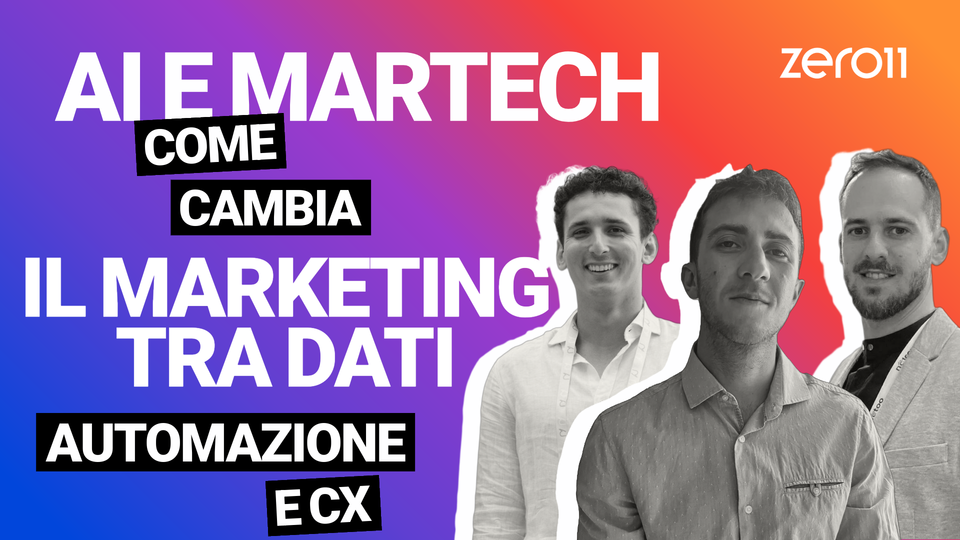
Andrea Bosio spricht über Rewix und erläutert, warum Prozesse, UX, Zahlungsverkehr, Preisgestaltung, CRM und Technologie im B2B-Handel einen spezifischen Ansatz erfordern.
Artificial intelligence is profoundly changing the way companies and marketers analyze data, understand people, and design increasingly personalized customer experiences. In this webinar, we’ll explore the intersection of AI and MarTech, from the evolution of traditional inbound and outbound marketing models to the use of analytics, natural language processing, knowledge graphs, recommendation systems, and AI agents. A journey to understand how data, technology, and artificial intelligence can work together to make marketing smarter, more contextual, and more focused on the customer’s real needs.
58 min
Watch →